 by Susan MacVittie, Web Exclusive
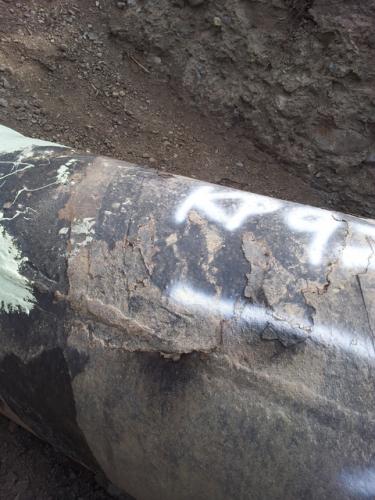
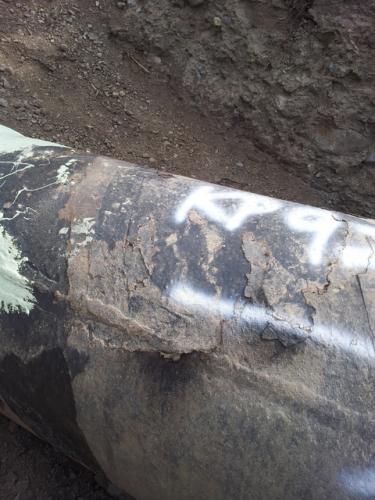
Photo Credit: David Ellis
Kinder Morgan Canada critic, David Ellis, is looking for people who would be interested in walking the Trans Mountain pipeline in the Blue River summit area, north of Thompson River, BC to keep an eye on the condition of the 60 year old pipeline.
“There is little public information as to the number of past and present repairs in this region and this data needs to be publicized. How many exposed pipe sites, and round, red, metal signs, have you seen? These indicate past pipe weaknesses. Keep
your eyes open for the presence of oily, contaminated soil, an indication of slow “pinhole” leaks. The pattern appears, that until a spill occurs, few repairs will go ahead.”
Davis has been walking the pipeline documenting its worn state and his photos show that the “old asbestos coal-tar saturated felt” covering has disintegrated in various places. The Trans Mountain Pipeline built in 1953, transports 300, 000 barrels of crude, semi-crude and refined petroleum products between Strathcona County, near Edmonton, Alberta and Burnaby, BC.
The company has proposed a controversial expansion that would twin the pipeline, which would triple its capacity and increase oil tanker traffic in BC waters. It would also include shipments of diluted bitumen, a heavier, molasses-like oil that critics claim is harder to clean up.
Kinder Morgan was forced to shut down the Trans Mountain pipeline on June 12 when several barrels of oil were lost through a crack in the line near Merritt, BC. The National Energy Board required maintenance of fencing around any exposed pipeline and patrols of sections identified for what are known as seam-weld integrity assessments.
During October, Kinder Morgan has been conducting a hydrostatic test on a 35-km section of its Trans Mountain Pipeline through the Coquihalla area between Merritt and Hope, BC. The voluntary test is part of the company’s maintenance program and uses water to test the strength and integrity of the pipe. The purpose of the test is to confirm the ability of the pipe to withstand a pressure greater than the maximum allowable operating pressure as an additional integrity assurance measure.
Ellis is concerned that that the effects of being in wet soil, given the duration of snow and heavy rainfall and sections of unculverted streams in the Blue River summit area are lending to the ongoing corrosion of the pipeline.
“There is a near nil prospect of ANY spill response, through most of the winter, due to avalanche danger, and the sheer depth of the snow, in the Coquihalla Canyon, a remote area to the east of the highway,” says Ellis. “Pipeline observers are urgently needed before the snow starts to fly.”
Please contact: David Ellis davidellis at lightspeed.ca
***
David Ellis has written the National Energy Board and asked the following questions:
1) Do all [pipeline] leaks have to be reported to the Transportation Safety Board? To the National Energy Board?
2) What triggered the order to lower the pressure in the Trans Mountain pipeline this summer? Did that order come from the National Energy Board?
3) How many 2013 repair sites in total, were just water pressure tested?
